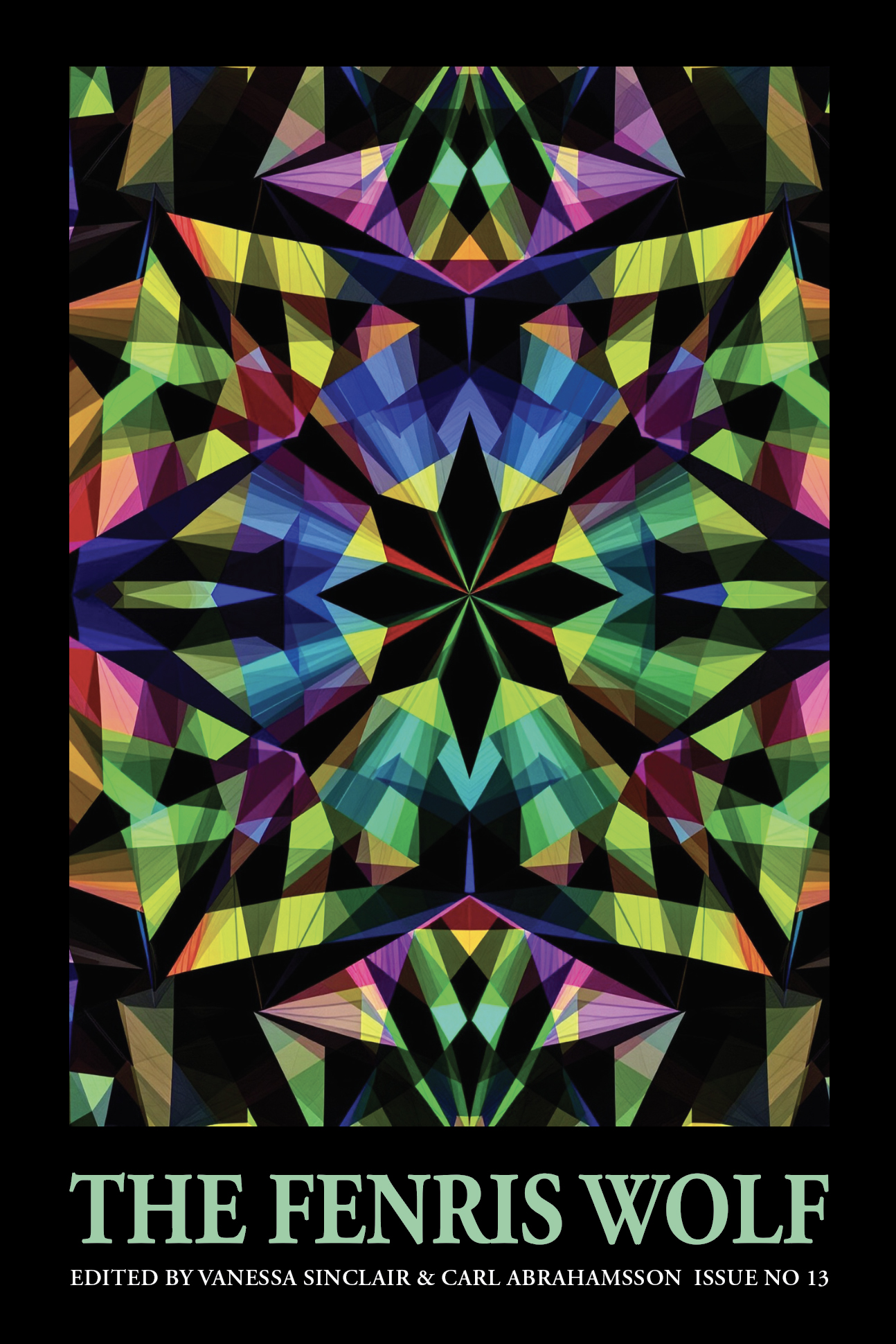
As of today, the thirteenth issue of The Fenris Wolf is published and available to order. The wait is finally over, and I’m grateful for the patience of Fenris fans and readers alike. I often wonder how it can take so long to assemble these monsters, but that just leads down similar rabbit-holes (or worm-ditto) as ”what’s beyond outer space?” Etc. So better to just repeat: As of today, the thirteenth issue of The Fenris Wolf is published and available to order.
It’s a special issue that bounces off the third ”PSYCHARTCULT” conference (Copenhagen 2022), and anthologizes many of its papers. The overarching theme is ”Film as a visionary medium.” We have also included many great papers and talks from the many psychartcult events we’ve had online together with Morbid Anatomy over the years. Here follows the blurb and a list of the contributors:
Step through the flickering darkness of the cinema and into the realm where celluloid becomes sorcery. This thirteenth issue of the long-running occultural journal The Fenris Wolf gathers essays, personal testimony, fiction, and visual art exploring cinema as humanity’s most potent modern mythology—a medium capable of trance, transformation, and genuine magical operation.
Drawn from a landmark international conference on psychoanalysis, art, and the occult held in Copenhagen in 2022, this substantial anthology treats film not as mere entertainment but as ritual technology. Contributors trace the hidden occult lineage of cinema itself—from ancient light-and-shadow magic and ocular science through the birth of the motion picture camera as an instrument obsessed with recreating human vision and consciousness.
Genre cinema receives rigorous reappraisal throughout: theme-park science fiction and its real-world echoes in immersive “total environments”; folk horror as a vessel for ecological anxiety and buried myth; the Satanic and esoteric undercurrents running through classic horror, cult exploitation films, and arthouse provocation; a controversial epic of Roman decadence read through the lens of Dionysian philosophy; the psychic violence embedded in Alfred Hitchcock’s editing techniques; and gothic fantasy as a lifelong artistic language for outsiders and misfits.
Deep biographical excavation forms a major thread, with extensive newly-uncovered archival material documenting Anton LaVey and his surprisingly extensive, often frustrating, sometimes hilarious dealings with Hollywood producers, B-movie directors, and exploitation filmmakers spanning decades—love scenes with a witch’s coven, sequences shot in a Mexican desert town, disputes over ownership and misrepresentation, and the strange Satanic afterlife of forgotten grind-house curiosities.
Additional territory includes the cut-up method as literal magical technique linking underground filmmakers, Beat writers, and sound experimentation; ketamine-assisted psychotherapy explored through the lens of ceremonial magic and inherited demon-lore; precognitive dreaming and its uncanny relationship to cinematic imagery; the liminal symbolism of glass, screens, and thresholds in ritual and viewing experience; feminist reclamation of witchcraft, seduction, and glamour on screen via filmmaker Anna Biller; the historical erasure of Black witches and spiritual practitioners within horror and prestige television; the mythology and dubious real-world reenactments of a fictional telepathic cinema device; possession, hysteria, and trance states connecting Haitian Vodou, Mesmerism, and early psychoanalysis; visionary directors’ unique treatment of gaze, gender, and violence; and a closing meditation on a recently departed David Lynch, master of dream-logic filmmaking.
Illustrated throughout and rich with citation, rare imagery, and firsthand testimony, this volume rewards film historians, practicing occultists, psychoanalytic thinkers, and cinephiles alike. Whether examining pianola technology’s strange kinship with android uprisings, the alchemical properties of the editing cut, or the folkloric roots of Halloween as high holy day, every essay insists that the moving image has always been, and remains, a doorway to something larger than entertainment—a mythic, psychological, and frankly magical force shaping how we dream, fear, and desire.
Authors in this issue of The Fenris Wolf: Anders Lundgren, Kasper Opstrup, Billie Steigerwald, Mara Norman, Charlotte Rodgers, Vanessa Sinclair, Ojoboca, Martin Munthe, Gustaf Broms, Ayesha Adamo, Anna Sebastian, Gast Bouchet, River, Carl Abrahamsson, Blanche Barton, Mitch Horowitz, Chaweon Koo, Bri Luna, Gary Lachman, Ana Leorne, Todd McGowan, Peggy Nadramia, Vanessa Sinclair, Sabina Stent, Matthew Levi Stevens & Locke Fitzroy, Jack Stevenson, Ad Vat, and Mary Wild.
Available as a paperback, hardback, and e-book. You can order your own copy right HERE.